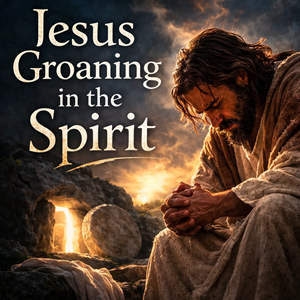
Jesus Groaning in the Spirit
Holy Indignation, Compassion, and the Conquest of Death
Introduction
In John chapter 11, as Jesus approaches the tomb of His beloved friend Lazarus, Scripture twice records that He groaned in the spirit and was troubled. The moment is tender, yet profoundly mysterious. Why does the Son of God-who knows He will raise Lazarus within minutes-feel such deep agitation?
This study explores the meaning of that groaning: its linguistic depth, spiritual force, and theological significance. Far from mere sadness, it reveals a holy indignation-an inward surge of divine grief and righteous anger against death, sin, and unbelief.
In Jesus' groaning we see both His perfect humanity and His divine resolve: He enters our sorrow, feels its weight, and confronts the powers that hold humanity captive.
When Jesus therefore saw her weeping, and the Jews also weeping which came with her, he groaned in the spirit, and was troubled.
Jesus therefore again groaning in himself cometh to the grave.
-John 11:33, 38
The Words Themselves: What Groaned in the Spirit Means
The Greek Expression
The phrase he groaned in the spirit
(Greek: ἐνεβριμήσατο τῷ πνεύματι - enebrimesato tō pneumati) carries a weight that English translations only partly capture.
The verb embrimaomai literally means to snort with anger, as a horse might before charging. It conveys stern agitation, deep indignation, or rebuke.
It is used elsewhere in the New Testament when Jesus sternly charges others (e.g., Mark 1:43; Matthew 9:30) and when people scold the woman who anointed Him. (Mark 14:5)
So, this was not quiet sorrow-it was intense inner outrage.
And Was Troubled (etaraxen heauton)
The second verb, was troubled, means to be stirred, shaken, or agitated. John uses it again when Jesus faces His own death. (John 12:27; John 13:21)
Together these verbs describe not emotional instability, but deliberate, holy disturbance-an inward revolt against the evil of death and the unbelief surrounding it.
What Stirred Jesus' Indignation
The Tyranny of Death
Standing before the tomb, Jesus faces the last enemy. (1 Corinthians 15:26) Death was never part of God's original creation-it entered through sin. (Romans 5:12) Christ's groaning is a righteous protest: the Creator confronting the corruption of His handiwork.
He is not weeping merely for Lazarus, but for all humanity enslaved by death's reign. This is divine grief with a warrior's heart-love angry at what sin has done to those it loves.
The Grief of Those He Loves
John tells us that Jesus saw Mary and the Jews weeping (klaiō, meaning loud wailing), and then He wept (dakryō, a quiet shedding of tears). His tears show compassion; His groaning shows indignation at the suffering death causes. Both emotions come from perfect love-the love that weeps with us and for us, yet refuses to accept the status quo.
The Presence of Unbelief
Despite His earlier words-I am the resurrection and the life-the scene around Him is thick with despair and unbelief:
Lord, if thou hadst been here, my brother had not died. (John 11:32)
By this time he stinketh (John 11:39).
Even after witnessing His miracles, many still doubted who He was. His spirit groaned against this blindness-a sorrowful indignation toward faithless grief that does not see God's glory even when it stands before it (John 11:40).
The Hollow Spectacle of Mourning
First-century funerals often included professional mourners, adding noise but not faith. Jesus' reaction may also target the empty ritual of hopeless grief, contrasting it with the living hope He embodies.
True mourning is holy, but hopeless lamentation offends divine compassion. Jesus' groaning resists the pretense of faithless sorrow.
The Significance of Jesus' Groaning
Holy Love in Conflict
In Christ's groaning, divine love enters battle with sin and death. The One who will soon command, Lazarus, come forth, first feels the full horror of the enemy He will defeat.
Love cannot be indifferent; true love hates what destroys the beloved. Jesus' groaning, therefore, is the sound of holy love resisting evil.
The Foreshadowing of the Cross
The same verb was troubled appears again when Jesus contemplates His death (John 12:27; John 13:21). At Lazarus' tomb, He faces a microcosm of Calvary-death, unbelief, grief, and corruption. His indignation anticipates the coming moment when He Himself will enter the grave to destroy it from within.
Thus, the groaning of John
11 is the first echo of Gethsemane.
Revelation of the Father's Heart
Jesus declares, He that hath seen Me hath seen the Father (John 14:9). Therefore, His groaning is not merely human empathy-it reveals the grief of God over a fallen creation.
The Almighty does not watch death dispassionately; He sorrows and burns against it. Christ's groaning shows us that God's holiness is not cold purity but love in pain, love that must act to redeem.
Pattern for the Church
Paul writes, The whole creation groaneth... and we ourselves groan within ourselves, waiting for the adoption (Romans 8:22 - 23). Just as creation groans for redemption, and the Spirit intercedes with groanings which cannot be uttered (Romans 8:26), so too Jesus groaned in the Spirit-the prototype of holy grief.
Believers share this divine tension: mourning sin and suffering, yet rejoicing in hope. A church that no longer groans at the world's corruption has forgotten the heart of Christ.
The Scene Unfolds
| Verse | Action | Meaning |
|---|---|---|
| 11:33 | Jesus sees Mary and the mourners weeping; He groans in spirit and is troubled | Holy anger and compassion mingle - love faces death's cruelty |
| 11:35 | Jesus wept. | Divine sympathy-He feels our sorrow personally |
| 11:38 | Jesus therefore again groaning in himself cometh to the grave. | Intensified resolve; He stands before death's gate as conqueror |
| 11:43 | Lazarus, come forth. | The groaning gives way to command - divine authority over death |
The One who groaned now speaks life. His voice reverses the curse. Love's indignation becomes resurrection power.
Theological Summary
| Aspect | Description | Scripture |
|---|---|---|
| Emotion | Holy indignation, not frustration | John 11:33, John 11:38 |
| Object | Death, sin, unbelief, and sorrow's tyranny | Romans 5:12; 1 Corinthians 15:26 |
| Revelation | Shows the heart of God - compassionate yet just | John 14:9; Hebrews 4:15 |
| Connection to the Cross | Anticipates Jesus' own agony and victory over death | John 12:27; Hebrews 2:14 - 15 |
| Model for Believers | We groan in hope, lamenting evil yet trusting God's triumph | Romans 8:22 - 26 |
Application for Believers
- Grieve with holy purpose. To love as Christ loved is to feel anguish at sin and death, yet to stand in faith, not despair.
- Do not mistake Christ's compassion for weakness. His tears and His anger spring from the same holy source-love that defends.
- Groan and pray. The Spirit's groaning within us is the continuation of Christ's own longing for redemption in all creation (Romans 8:26).
- Proclaim the victory. The One who groaned has conquered death. Every sigh of sorrow is temporary; resurrection is certain.
- Be stirred, not complacent. If Jesus could not look upon sin and death unmoved, neither should His followers. Spiritual apathy is the opposite of Christ's holy agitation.
Reflection and Discussion
- Do I allow myself to feel the weight of sin and death, or do I avoid the discomfort?
- When I grieve, do I turn my sorrow into prayer and faith, as Jesus did?
- How does knowing that Jesus wept and groaned change my picture of God's character?
- Where is God calling me to reflect His holy compassion in a world that mourns without hope?
Key Scriptures for Meditation
- John 11:33 - 44 - Jesus' grief and triumph at Lazarus' tomb
- 1 Corinthians 15:26, 1 Corinthians 15:54 - 57 - The last enemy that shall be destroyed is death.
- Romans 8:22 - 26 - Creation's groaning and the Spirit's intercession
- Hebrews 2:14 - 15 - Christ's victory over the fear of death
- Revelation 21:4 - There shall be no more death, neither sorrow, nor crying...
Conclusion
When Jesus groaned in the Spirit, He did not merely feel emotion-He declared war upon death itself. His indignation was love's protest, God's wrath against sin, and the beginning of resurrection victory.
This moment reminds believers that the heart of God is not detached, but deeply engaged. Jesus' holy anger assures us that our pain matters, and that death will not have the final word.
From His tears flows comfort; from His groaning flows power; from His command, life everlasting.
1 John 3:8
The Son of God was manifested, that He might destroy the works of the devil.